
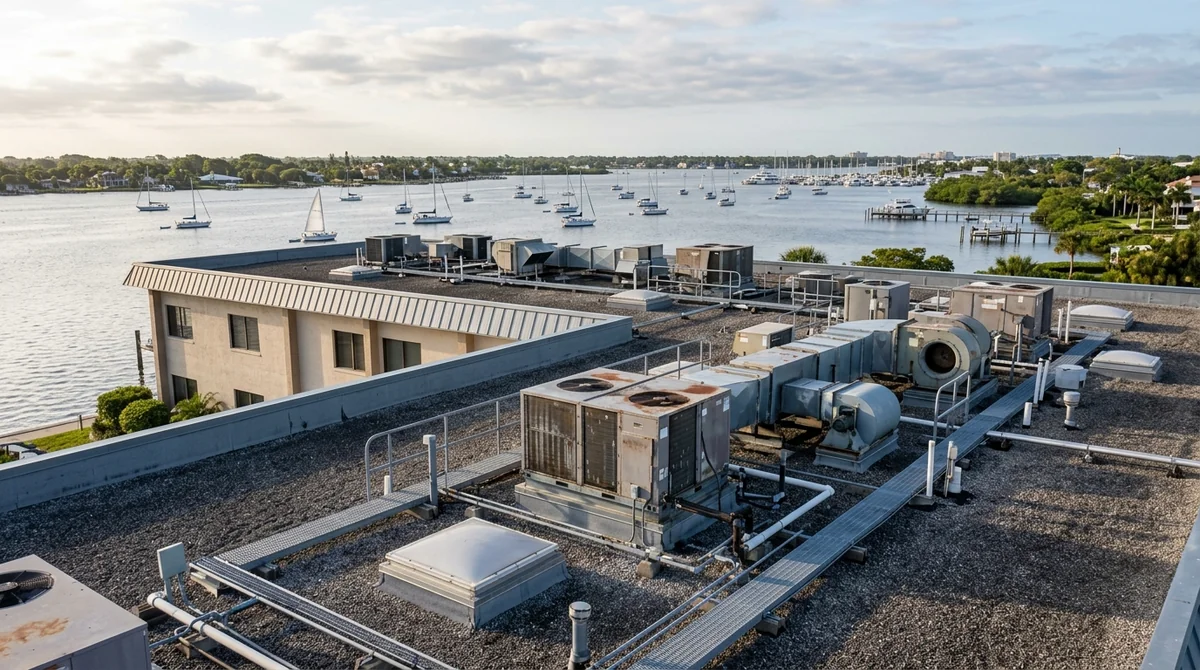
Commercial Repairs & Maintenance Agreements
For a business across the Treasure Coast and northern Palm Beach County, losing cooling on a busy afternoon costs customers and staff time. A/C Now is a licensed, family-owned contractor that uses no subcontractors. Every repair is quoted at a flat rate before any work begins, and maintenance agreements are available to keep your equipment on a regular service schedule.
- Flat-Rate Repairs and Preventive Maintenance
- Multi-Zone Coastal Air Handler Upgrades
- Licensed Commercial Rooftop Package Installs
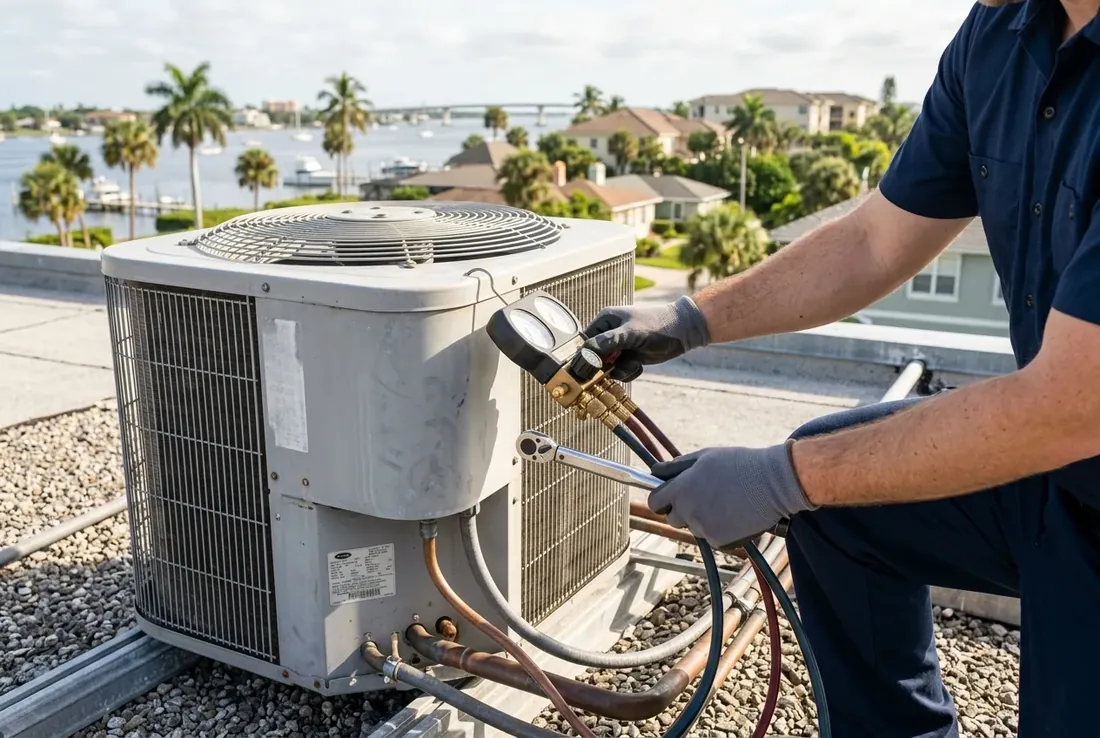
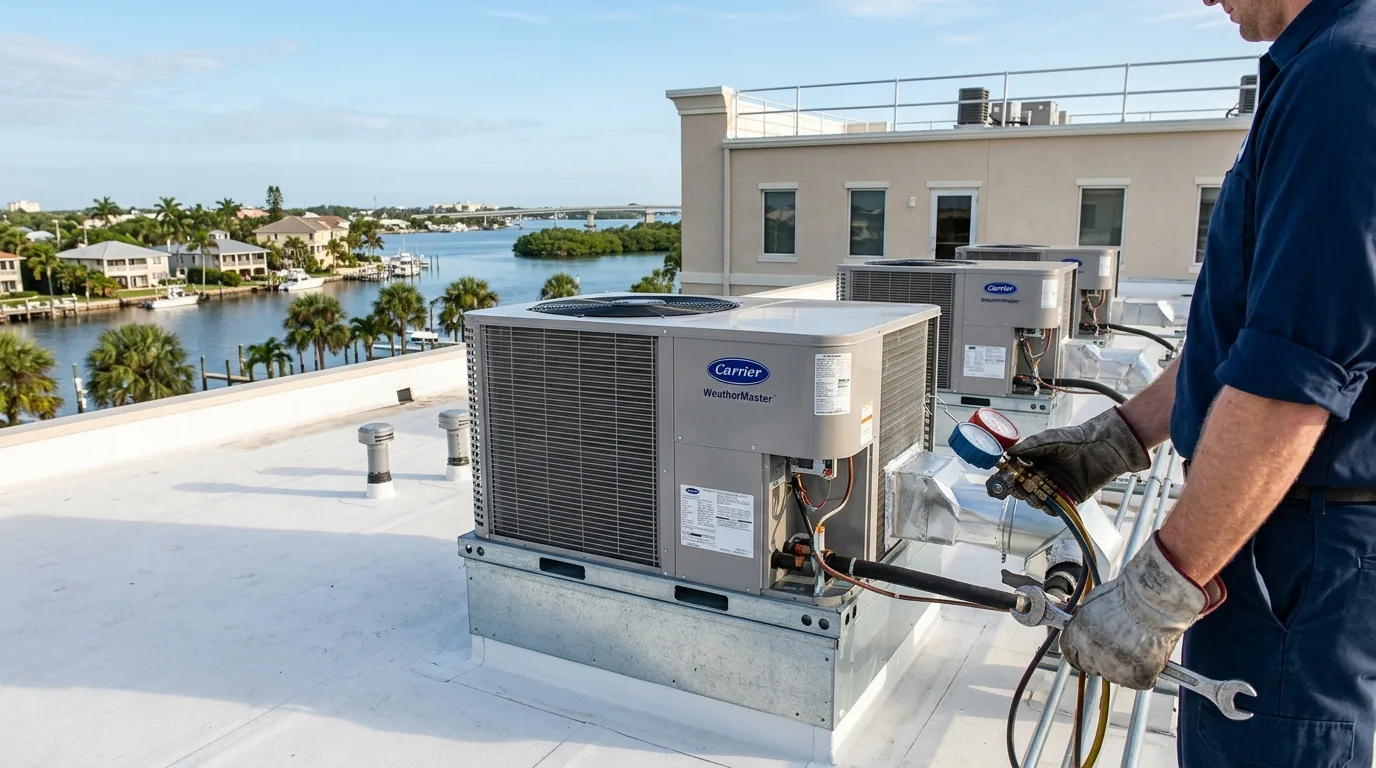
Rooftop Package & Split System Cooling
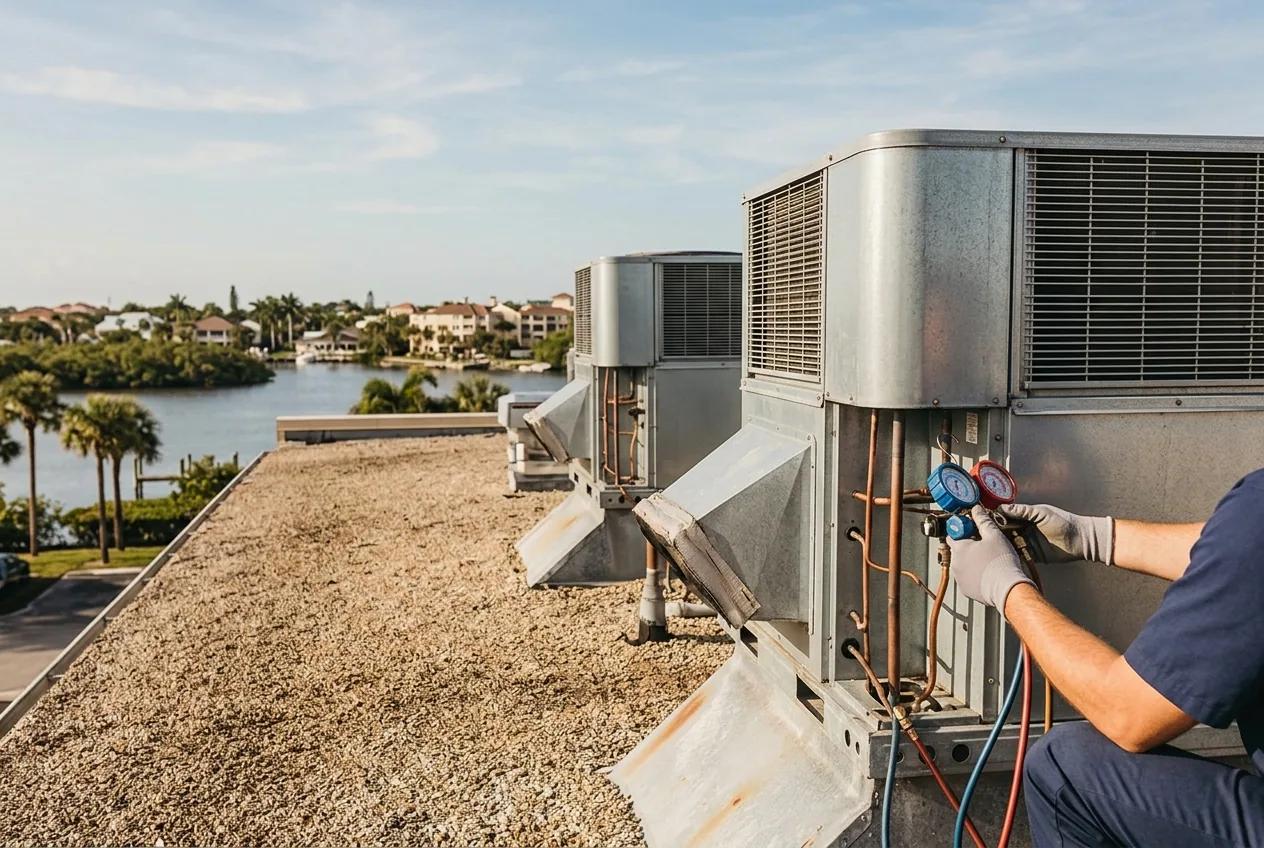
Commercial rooftop units and split systems need correct load matching, protection for coils exposed to salt air, and regular preventive maintenance to keep a business running through the summer without an unplanned shutdown.
Request a Commercial QuoteDirect Team Accountability
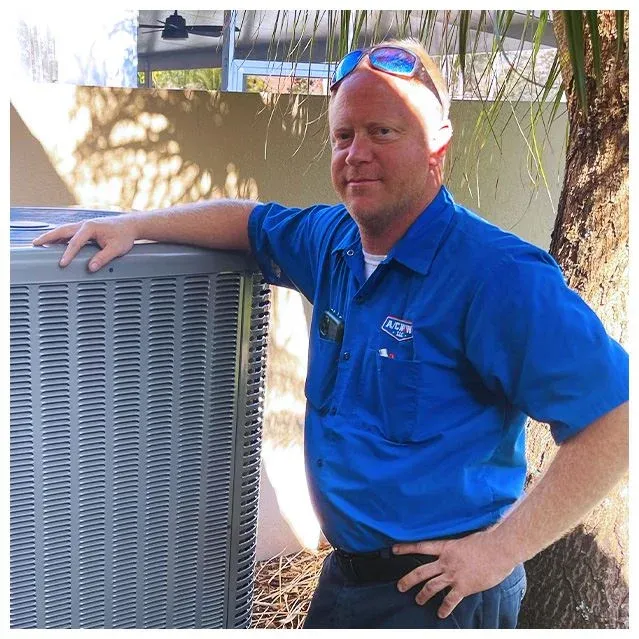
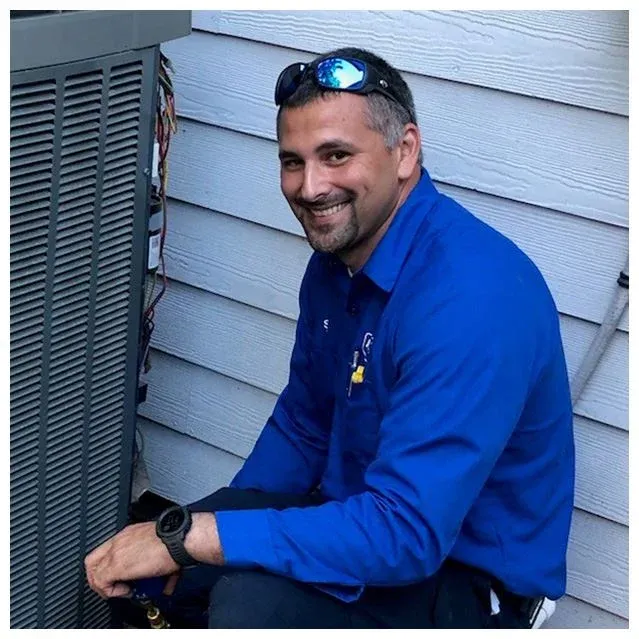
Commercial work is done by A/C Now's own team, never subcontracted.
Request a Commercial Quote
Fill out the form below and the A/C Now team will get back to you about your commercial property and its cooling needs.
Multi-Zone Ductless for Stuart Businesses
Historic downtown Stuart stacks offices and studios above ground-level retail, and those upper floors are the ones a central system tends to serve worst. A tenant upstairs often has no use of the roof, and many older buildings leave little room above the ceiling for new duct. Ductless asks only for a small wall penetration and a condenser at grade or on a side wall, a far lighter change to put in front of a landlord than a new rooftop unit.
HVAC Equipment & Environmental Factors in Stuart, FL
Commercial property in Stuart falls into roughly three groups: the older buildings of the historic downtown, where access and alterations take extra care; newer commercial construction along Kanner Highway; and the waterfront, where restaurants, shops and offices live with salt air on their outdoor equipment every day. Each group calls for a different approach, and a contractor who treats all three the same way is likely to miss something important in at least one of them.
Many of downtown Stuart's older commercial buildings were not laid out for today's cooling loads. A shop that once held a few people may now run more staff, computers, lighting and point-of-sale equipment, while the ductwork and the equipment sizing above the ceiling have not necessarily kept pace. Before replacing anything in a building like that, look at the envelope, at how the space is used now and at the condition of what is installed, then size the new system to that load rather than to the old unit's tonnage. When it is time for a replacement, A/C Now pulls the permit and hauls away the old equipment.
🌊 Climate Reality Check: Coastal Salt-Air Defense
Salt carried in on the sea breeze settles on outdoor coils, fasteners and cabinets and slowly corrodes them. Rinsing the outdoor coil with fresh water helps, and coated coils and stainless hardware are worth asking about when a unit is replaced.
Frequently Asked Commercial HVAC Questions
Common questions about package units, rooftop service and budgeting.
In an older downtown Stuart storefront, the supply ducts run above the ceiling through a hot, unconditioned space, and the rooms never feel as cool as the equipment should make them. What is the most cost-effective fix?
Supply ducts carrying air at around 55°F through an unconditioned space above the ceiling pick up heat along the way and can sweat on the outside, which stains ceiling tiles. Compare the air temperature leaving the unit with the temperature at the registers, then check the runs for gaps and missing insulation. Sealing and insulating them usually costs far less than replacing them.
Why would the air conditioning in a waterfront Stuart shop smell musty every Monday morning after a two-day closure, when nobody can find any trace of the smell later in the week?
A musty smell after a weekend shutdown usually comes from the coil and the drain pan. With the system off for two days in Stuart's marine humidity, the evaporator coil and pan stay wet with nothing to dry them, and mold and bacteria grow; the first rush of air on Monday carries the odor into the room. Running the fan alone does not help, because air blown over a wet coil puts moisture back into the space. Leave the system cooling at a moderate setback over the weekend, keep the condensate drain clean, and have the coil cleaned if growth has taken hold.
What is the best setback schedule for Kanner Highway office buildings during weekend closures?
Set the system back instead of shutting it off. A weekend setpoint in the upper 70s keeps it running often enough to pull moisture out of the closed offices. Keep the fan on AUTO, not ON, so the coil drains between cycles, and start the recovery early enough on Monday that the building is comfortable when people arrive.