

Lower Utility Bills & Stop AC Breakdowns
In a climate where an air conditioner runs close to year-round, maintenance isn't seasonal housekeeping — it's what keeps a hard-working system from failing in August. A/C Now runs preventive tune-up plans across northern Palm Beach County that look after the cooling side of your system and, if you have a heat pump, the heating side as well.
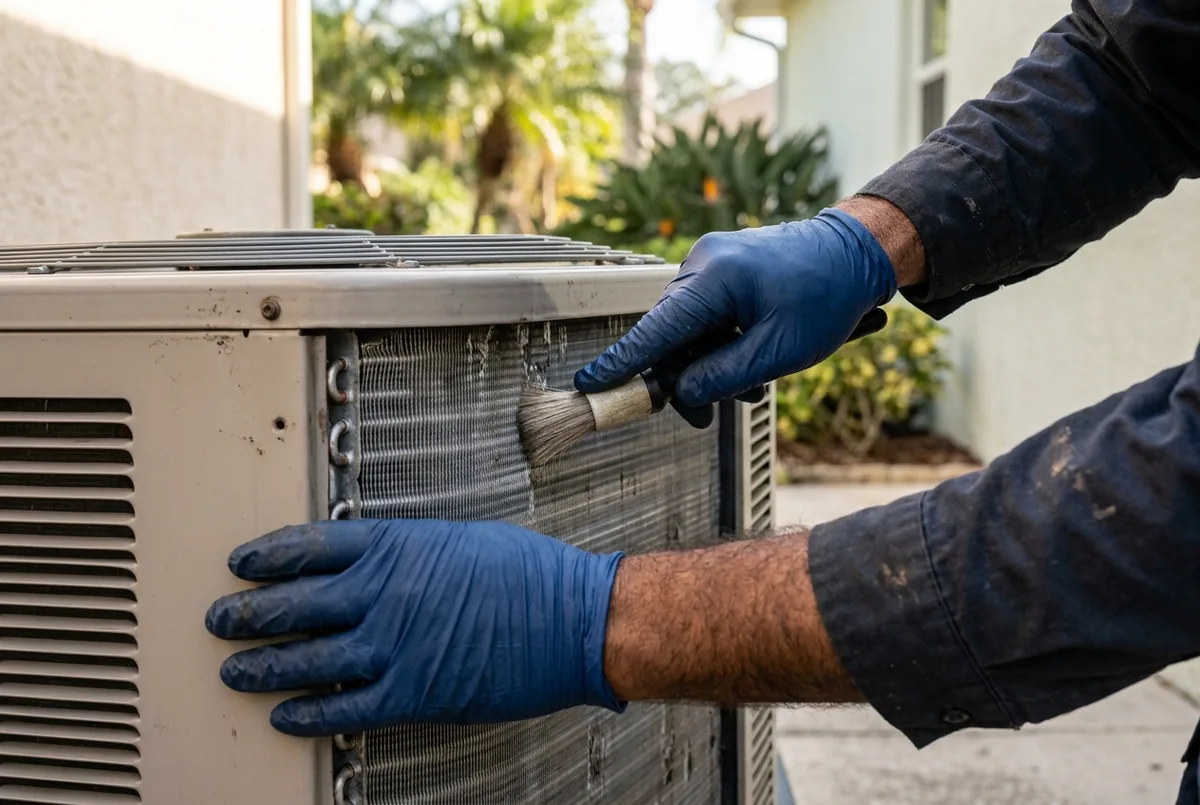
The salt-tinged coastal humidity works on your equipment all year — corroding coils and clogging condensate drains with algae. A 21-point tune-up gets ahead of the parts that wear fastest, and its checklist includes a rinse of the salt and road grime off the outdoor coil, an inspection of the blower wheel that moves air through your home, and a test of the capacitor, a small part that tends to give out in peak heat. Between visits, keep the condensate drain clear, because a backed-up line can put water on your floor.
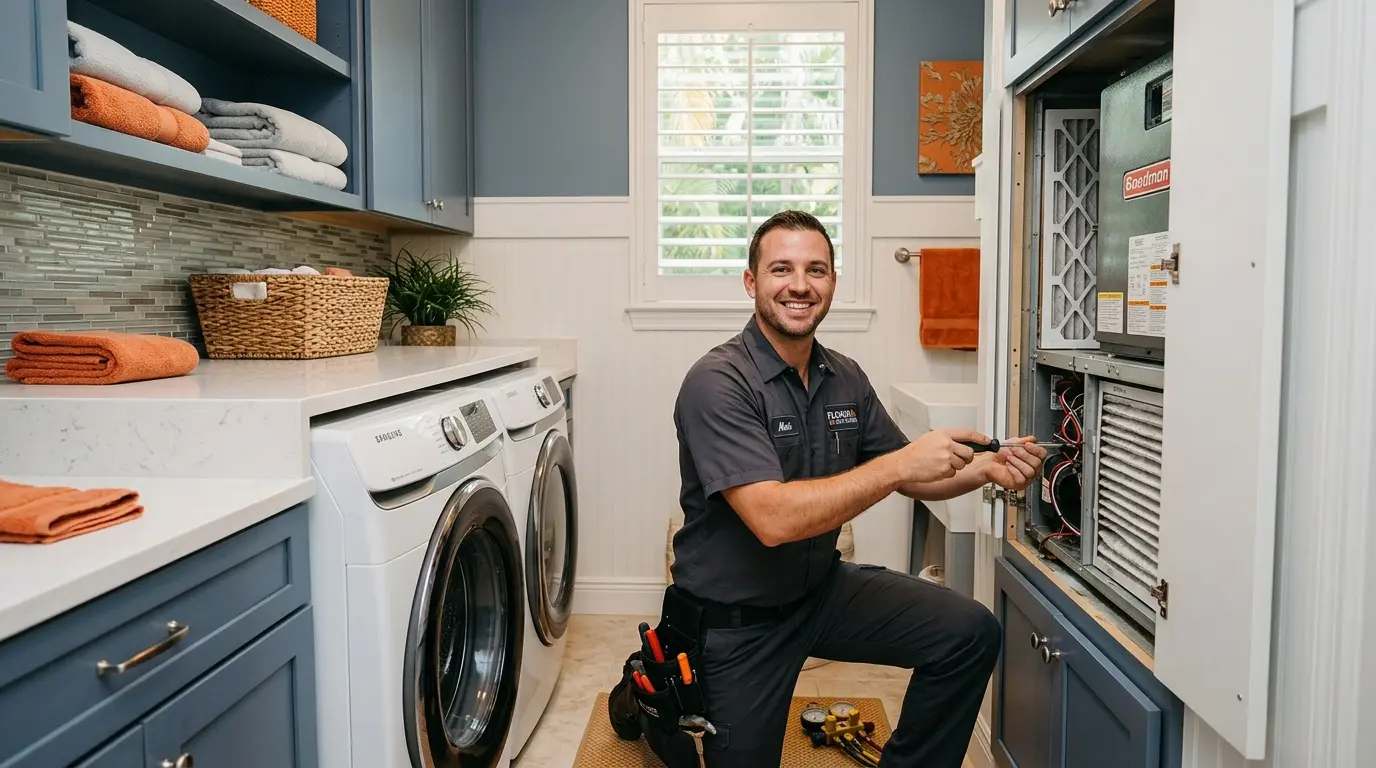
Maintenance Comfort Shield Protection Plans
Gold Plan
- 🟢2 Annual 21-Point Precision Tune-Ups
- 🟢$39 Member Diagnostic Fee (Mon–Fri 8 AM–5 PM; $129 after-hours/weekends)
- 🟢15% Discount on Parts & Labor Repairs
Platinum Plan
- ★4 Annual 21-Point Precision Tune-Ups
- ★$39 Member Diagnostic Fee (Mon–Fri 8 AM–5 PM; $129 after-hours/weekends)
- ★15% Discount on Parts & Labor Repairs
One-Time Precision Tune-Up
Get a full 21-point tune-up, including the outdoor coil rinse, blower wheel inspection and capacitor test, for a flat one-time rate of $99 (Normally $129). A good fit if you want a single visit without joining a plan.
$99 per system, residential only. Repairs and parts extra. Offer ends November 30, 2026.
Request Your Maintenance Appointment
Book your tune-up today. Choose a plan or a one-time visit, pick a preferred date, and use the notes box to flag any noise, leak or warm room.
*Standard business hours diagnostic fee is $89 ($39 for Comfort Shield Protection Plan members). After-hours weekdays and weekend emergency diagnostic service is $169 ($129 for members).
Florida AC Hurricane Hardening & Snowbird Re-Open Checklists
Protect your air conditioner from tropical storm power surges, salt-air corrosion, and long-absence humidity damage with these two practical Florida checklists.
AC Hurricane Hardening Checklist
Steps to take before and after a Florida tropical storm:
- ✓ Pre-Cool Thermal Mass: While you still have power, set the thermostat a few degrees cooler so the house holds some coolness.
- ✓ Tie-Down Strap Audit: Confirm straps and pad anchors are tight.
- ✓ Pre-Storm Breaker Cut: Then turn off the AC breaker to block surges.
- ✓ Post-Storm Restart Check: Wait for steady power; if the unit flooded or took debris, leave it off until it's inspected.
- ✓ $59 Pre-Storm Inspection: Have a technician check the system early in the season (Learn More & Book $59 Inspection).
Snowbird Home Re-Open Checklist
Essential pre-occupancy inspection steps for seasonal homeowners coming back after the summer away:
- ✓ Condensate Line Vinegar Flush: Pour 1/2 cup white vinegar into drain line T-pipe to clear algae build-up from summer vacancy.
- ✓ Humidistat & Wi-Fi Sync: Calibrate humidistat targets (under 55% RH) and test remote Wi-Fi thermostat accessibility.
- ✓ Coil & Filter Inspection: Replace media air filter and inspect indoor air handler drain pan for standing water before continuous operation.
- ✓ Book Pre-Season Tune-Up: Schedule your $99 one-time 21-point precision tune-up (normally $129) to help maintain peak efficiency.
HVAC Equipment & Environmental Factors in Jupiter, FL
In Jupiter, where the AC runs nearly year-round and salt air is always in the background, a maintenance visit is also a chance to catch corrosion early. Homes around Admirals Cove, Jonathan's Landing and Jupiter Inlet Colony sit close to the water, and marine air is hard on outdoor coils, fasteners and cabinets.
Jupiter's Intracoastal homes and the rural lots out in Jupiter Farms wear their equipment down in different ways. Near the water, salt settles on the outdoor coil and slowly corrodes the fins, so regular rinsing matters more than almost anything else. Out in the Farms, the threat is organic: leaves, pollen, grass clippings and other debris mat against the coil face and choke the airflow. Either way, the coil rinse at every visit goes after the main problem, and keeping shrubs and mulch well back from the unit helps between visits. Where outdoor units sit close together, as they can in townhome communities like Abacoa, a unit crowded by a neighbor's condenser or a fence can pull its own hot exhaust back through the coil, so keep the space around it open. If your home has a variable-speed or communicating system, it may display fault codes on the thermostat; note what the screen says before you call. And in Tequesta's older neighborhoods, a system that has never quite kept up may simply be the wrong size for the house. When it reaches replacement, the new system is sized to the home with a load calculation rather than matched to the old unit's tonnage.
🌊 Climate Reality Check: Coastal Salt-Air Defense
Salt carried in on the sea breeze settles on outdoor coils, fasteners and cabinets and slowly corrodes them. Rinsing the outdoor coil with fresh water helps, and coated coils and stainless hardware are worth asking about when a unit is replaced.
Frequently Asked AC Maintenance Questions
Common questions about maintenance schedules and the Comfort Shield plan.
How often should a Jupiter Intracoastal home get AC maintenance?
Twice a year is a good baseline for a home near the Intracoastal, the Loxahatchee River or the inlet. With only one visit a year, salt has twelve full months to build up on the coil between professional cleanings. The Gold Plan includes two tune-ups for $155 a year, and the Platinum Plan includes four.
My Jupiter system has Carrier equipment — does your maintenance cover it?
Yes. The 21-point tune-up is the same on a Carrier as on any other split system or heat pump, and it includes the outdoor coil rinse, a look at the blower wheel and a capacitor test. If you have the model number handy, share it when you book.
Does Jupiter's climate require any special maintenance steps not done in inland markets?
It shifts the emphasis more than the checklist. Near salt water, the coil rinse becomes the most important step, and a low-pressure rinse from the garden hose between visits helps keep salt off the fins.